How SISYA CLASS Helps Kids Turn Gaming Skills into Real-World Coding Confidence
SISYA CLASS empowers kids to move from gaming to coding by building strong programming skills, logical thinking, and digital confidence.

Sisya Admin

From Gamers to Future Innovators: How SISYA CLASS Transforms Kids into Confident Coders
For many parents, gaming often feels like a distraction—an activity that pulls children away from academics and productivity. But what if gaming wasn’t a roadblock, but a gateway to a future in tech? What if your child’s passion for games could be the spark that ignites their journey into computer programming, problem-solving, and creative thinking?
At SISYA CLASS, we believe gaming is more than entertainment. It's a launchpad for transforming digital consumers into creators. Through a unique, engaging, and AI-enhanced curriculum, we turn screen time into skill time, helping children learn coding by building what they love: games, websites, and even AI-powered projects.
Why Gamers Make Natural Coders
Children who love video games already possess many of the cognitive and emotional skills needed to become successful programmers. The leap from player to developer is far more natural than most people realize.
1. Logical Thinking and Problem-Solving Skills
Behind every exciting game is a structured system of rules, patterns, and logic. Gamers subconsciously learn to recognize these patterns, adapt strategies, and solve in-game challenges. These very skills, such as breaking down problems into smaller steps, debugging failures, and optimizing strategies, are fundamental to coding.
When children start coding, they're already familiar with systems thinking. They can intuitively grasp how changes in one part of a system affect the whole, just like modifying a rule in a game changes how it's played.
2. Persistence and Growth Mindset
Any seasoned gamer knows the pain of trying a level again and again until they finally beat the boss. This resilience, or what psychologists call a growth mindset, is essential in programming. Bugs and errors are inevitable in coding, and persistence is the only way through.
Gamers are used to failing, learning, and improving. That’s exactly what a beginner programmer must do.
3. Creativity and Imagination
Many games today encourage creativity, whether it’s designing structures in Minecraft or customizing avatars in role-playing games. Coding empowers kids to take this creativity further. They get to build their own games, applications, and stories from scratch.
They’re no longer bound by the limitations of someone else's world. They can create their own.
4. Understanding of User Experience (UX)
Children who game regularly are naturally tuned into what makes an app or game engaging, intuitive, and fun. When they begin building their own digital projects, they use this internal compass to design with the end-user in mind. This is an advanced skill that professional developers take years to learn.
The SISYA CLASS Approach: A Path from Play to Creation
SISYA CLASS doesn’t rely on rote memorization or textbook-based learning. Instead, our project-based curriculum is rooted in hands-on creation. Children build real-world projects from day one, keeping their motivation high and their engagement natural.
Phase 1: Visual Coding – Making the First Game
The learning journey begins with visual, block-based programming languages like Scratch or Blockly. These environments allow young learners to drag and drop code blocks to animate characters, move sprites, and create game mechanics, all without writing a single line of text-based code.
Key Learning Outcomes:
- Understanding of basic programming concepts: loops, conditions, variables, and events
- Immediate gratification from seeing their creations come to life
- Building confidence without the barrier of syntax errors
Example Projects:
- Simple maze games
- Catch-the-ball challenges
- Character movement animations
By connecting game actions to programming concepts (for example, a “jump” is a function; a “score” is a variable), children develop a deep, intuitive understanding of how games work.
Phase 2: Transition to Text-Based Programming
Once students are comfortable with foundational logic, they’re introduced to real-world coding languages like Python and JavaScript. These languages are widely used in web development, data science, and even artificial intelligence.
Enter the AI Study Buddy
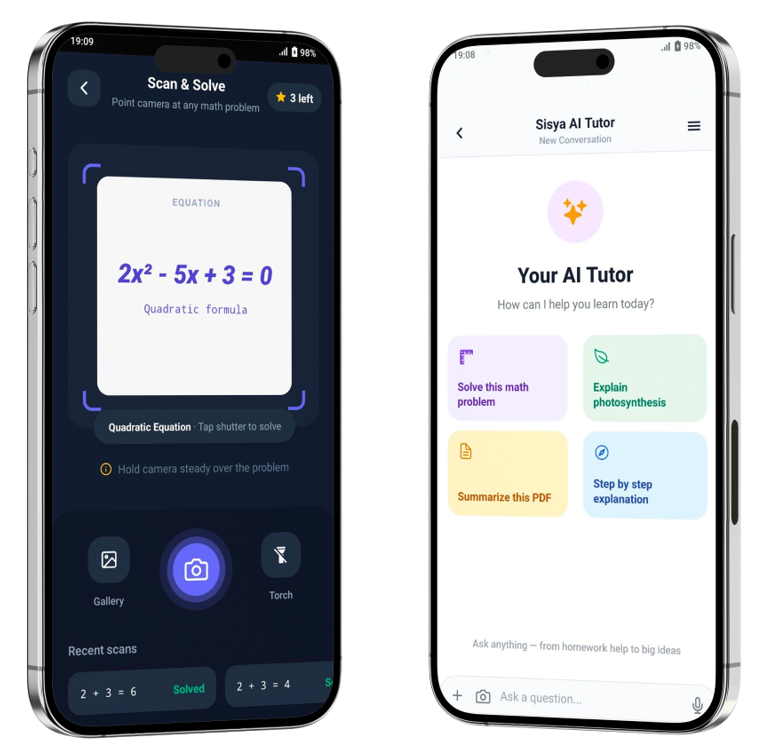
One of SISYA CLASS’s most powerful tools is the 24/7 AI-Powered Study Buddy. This digital mentor helps students:
- Debug code in real time
- Understand complex concepts
- Ask questions using voice, text, or images
- Learn from mistakes through tailored explanations
This innovative AI ensures that no student ever feels stuck, even when learning independently.
A Curriculum Designed for the Future
At SISYA CLASS, every module culminates in a student-led creation. The goal isn’t just to teach syntax. It’s to empower students to express themselves through technology.
1. Game Development Projects
As learners progress, they start building their own games using languages like Python or tools like Unity or Pygame.
Examples:
- Flappy Bird-style games
- Platformers like Super Mario
- Whac-a-Mole logic puzzles
Through these projects, they learn about:
- Game mechanics
- User interface (UI) design
- Animation loops
- Sound integration
2. Web Development Skills
Students are also introduced to web technologies such as HTML, CSS, and JavaScript. They learn how to build:
- Personal blogs or websites
- Fan pages for favorite games
- Interactive portfolios
These skills are foundational in today’s digital world and open the door to future careers in web design, digital marketing, and entrepreneurship.
3. Exploring AI, Robotics, and Automation
Advanced learners can opt into specialized modules in:
- AI and Machine Learning, such as training simple AI models for games
- Robotics, including writing code that controls robotic movement
- Automation, such as creating smart bots or tools
Here, they see how coding intersects with real-world innovation, moving from digital games to tangible technology.
Real-World Impact: More Than Just Coding Skills
The transformation at SISYA CLASS is not just about learning to code. It’s about developing a growth-oriented mindset and valuable life skills.
1. Problem-Solving Confidence
When students build a game or fix a bug, they learn that no challenge is insurmountable. They become confident problem-solvers, equipped with the tools to break down and tackle any issue, technical or otherwise.
2. Entrepreneurial Thinking
Learning to code teaches kids how to identify problems, design solutions, and share them with the world. This is the foundation of entrepreneurship. Whether they build a website for their small business or launch an app idea, they begin thinking like creators, not just consumers.
3. Digital Literacy for the 21st Century
Coding is the language of the future. Students who understand how technology works are better prepared to:
- Navigate the digital world safely
- Understand privacy and security
- Contribute meaningfully in an AI-powered economy
Conclusion: Turning Play into Purpose
The line between playing games and creating them isn’t as wide as it seems. With the right guidance, tools, and motivation, children can evolve from gamers into innovative coders, ready to shape the future of technology.
At SISYA CLASS, we harness the power of gaming to spark curiosity, creativity, and confidence. Our AI-powered learning environment, project-based curriculum, and future-ready skill-building approach equip children with far more than technical skills. They leave with the mindset of makers, the skills of future leaders, and the confidence to code their own path in life.
Ready to turn your child’s screen time into skill time?
Enroll them in SISYA CLASS today and watch them go from gamer to creator, one line of code at a time.